HENRY OSSIAN FLIPPER | 1856–1940
A Life of Courage, Perseverance & Service
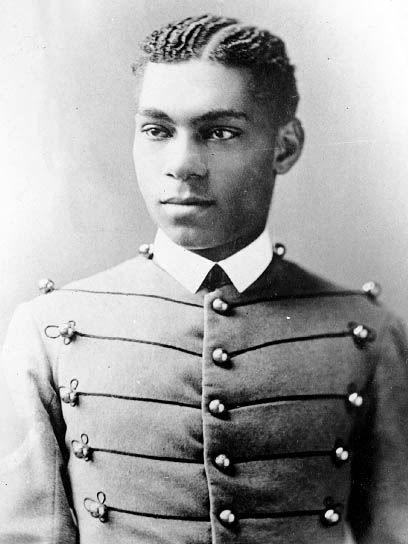
Born into slavery in Thomasville, Georgia, Henry Ossian Flipper would go on to break one of the most significant barriers in American military history. On June 14, 1877, at age 21, he became the first African American graduate of the United States Military Academy at West Point. Yet his graduation was only the beginning of an extraordinary life shaped by service, achievement, adversity, perseverance, and an enduring pursuit of honor.
THOMASVILLE, GEORGIA → WEST POINT → THE AMERICAN WEST → A LEGACY RESTORED
1856

1856–1873
From Thomasville to Opportunity
Henry Ossian Flipper was born enslaved on March 21, 1856, in Thomasville, Georgia, to Festus and Isabella Flipper. His early life was marked by the profound transition of his family from slavery into freedom following the conclusion of the American Civil War.
Driven by a relentless pursuit of knowledge, he sought education through schools operated by the American Missionary Association and later attended Atlanta University. For the Flipper family, education was more than a personal achievement; it was a central theme of survival and the pathway that eventually led Henry toward the Long Gray Line of West Point.

Heading 1
1873–1877
The Long Gray Line
Flipper sought an appointment to West Point and entered the United States Military Academy on July 1, 1873. His four years at the Academy, including profound social isolation as one of the few Black cadets, alongside strong academic performance, tested his resolve.
1877
JUNE 14, 1877
A Barrier Broken. A Legacy Begun.
1877–1881
Lieutenant Flipper & the 10th Cavalry
After graduation, Flipper was commissioned a second lieutenant in the United States Army and assigned to the 10th U.S. Cavalry, whose soldiers became known as Buffalo Soldiers. His responsibilities included engineering, surveying, and frontier service.
Flipper's Ditch
At Fort Sill, Flipper supervised construction of a drainage system to eliminate malaria. The successful system, known as 'Flipper's Ditch,' remains an engineering landmark.

1881–1882
A Career Interrupted

While serving at Fort Davis, Texas, Flipper faced a court-martial involving government commissary funds. He maintained his innocence and spent decades seeking restoration of his military standing.
Acquitted of embezzlement.
Convicted of conduct unbecoming an officer and a gentleman.
Dismissed from the Army in 1882.
1882
1976
Military review finds his sentence unfair; record corrected to an honorable discharge posthumously.
1978
Flipper Returns Home
Henry’s remains were exhumed from his unmarked grave in Atlanta and received a full military burial at Thomasville’s Old Magnolia Cemetery.


1999
Presidential Pardon
On February 19, 1999, President Bill Clinton granted a postwar posthumous pardon to Henry O. Flipper, officially correcting the record of his military service. This historic act of justice acknowledged the racial prejudice he faced and fully restored his honor to the nation he served.
A Legacy Secured
'By this pardon, we recognize the dignity of the man and the honor of the service he provided to our country.'
— President Bill Clinton
Engineer. Author. Translator. Public Servant.
BEYOND THE UNIFORM
ENGINEER
AUTHOR
A pioneer in mining and civil engineering throughout the American Southwest and Mexico, establishing landmarks that remain functional today.
Documented his own struggle and resilience in his seminal work, The Colored Cadet at West Point, a foundational text in African American military history.
TRANSLATOR
PUBLIC SERVANT
Served as a premier Spanish-language expert and translator for the U.S. Department of Justice, navigating complex international legal codes.
Provided expert counsel on Mexican law and land surveying at the highest federal levels, proving his merit as a dedicated civilian officer.
An Enduring Legacy
His place in history began with a first. His legacy reaches far beyond it.
JUNE 14, 2027
150 YEARS OF LEGACY
Henry O. Flipper’s story is a profound thread connecting Thomasville, West Point, the Buffalo Soldiers, and the broader American experience. It is a legacy defined by engineering innovation, literary contribution, public service, and the relentless pursuit of justice. Today, we remember his name and the path he forged for those who follow.